
03 / VPMI TECHNOLOGY
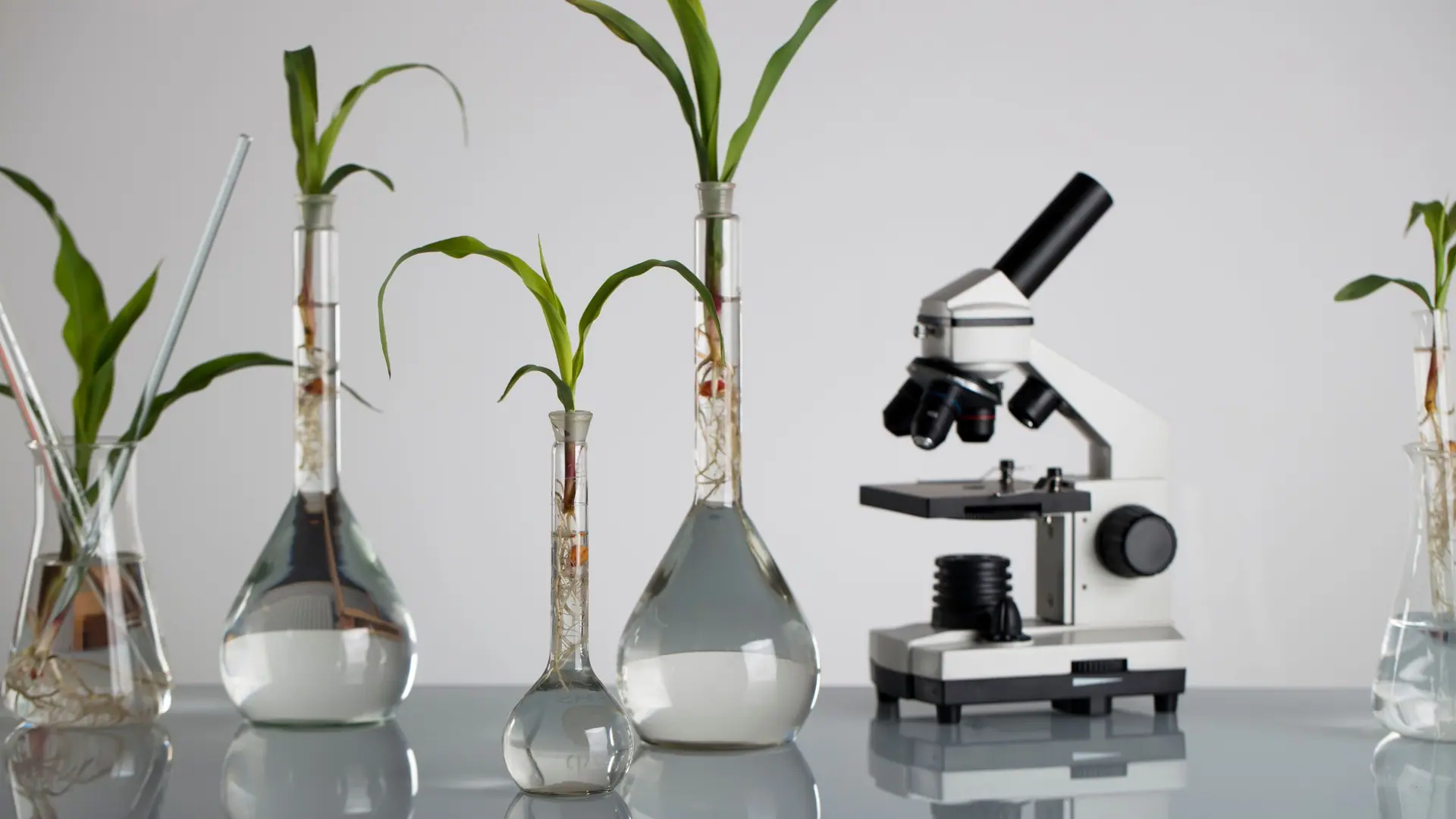
Fresh plants, water, VPMI-CM —
then sealing and waiting
No heat, no chemicals, no salt, no sugar. When metabolism completes at around pH 3.2, the solids and liquid are separated and stored at or below −18 °C.
In plain words
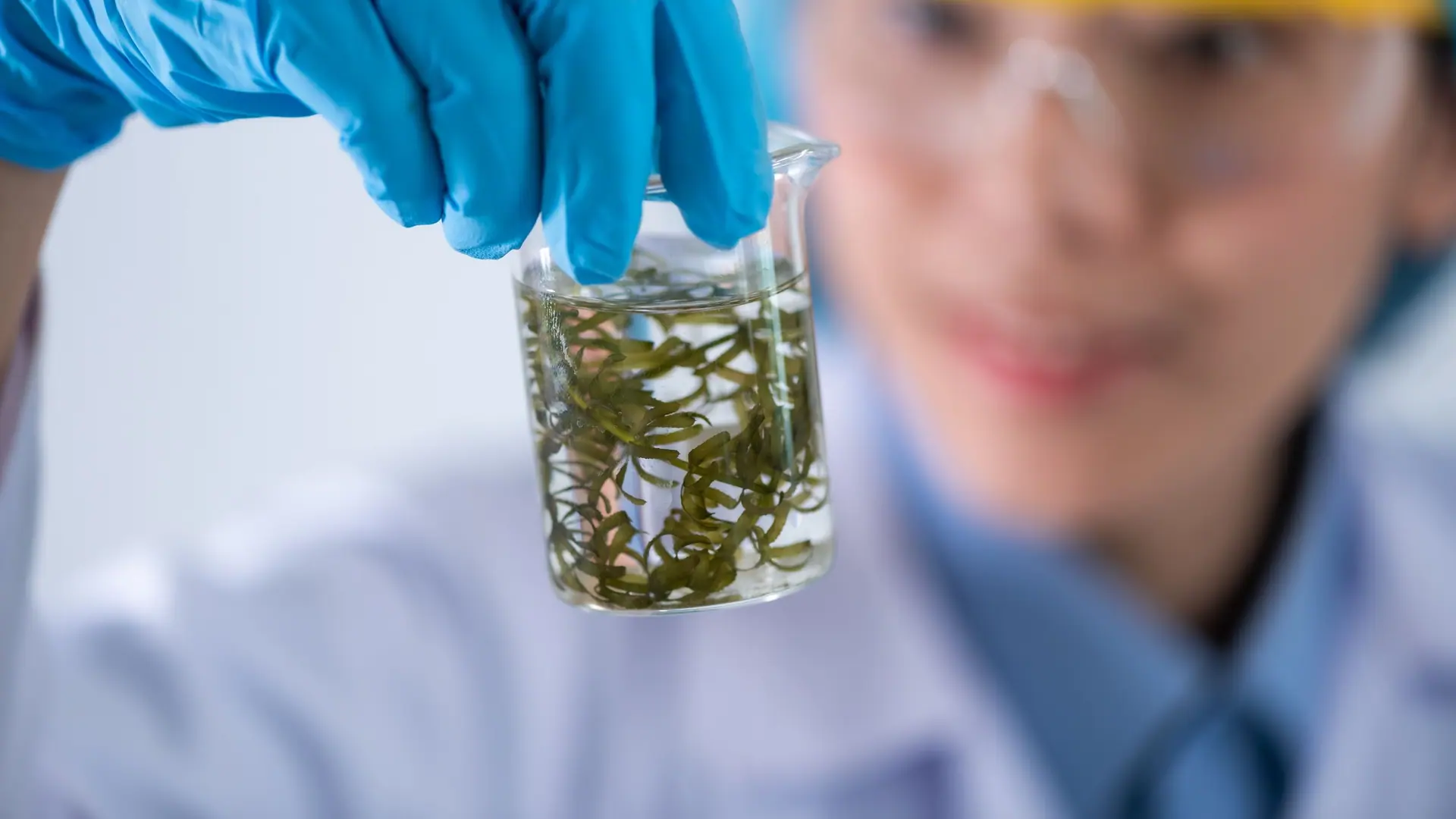
Making GRBM looks surprisingly simple: wash and cut the youngest, freshest plants, add water and VPMI-CM in set ratios, seal, and keep at 18–32 °C. That is all.
But inside, the plant's own lactic acid bacteria dominate and metabolize the plant to suit human cells. When the pH stabilizes at around 3.2, metabolism is complete — and this can be confirmed by numbers. That is what makes industrial standardization and mass production possible.
Finished GRBM is separated into nano-sized fine powder cake (solids) and liquid, both stored frozen at or below −18 °C.
One process platform, six process types
| Type | Process | Core purpose | Main product direction |
|---|---|---|---|
| A | Single-plant metabolism | Capture a plant's unique metabolome | Whole metabolome, liquid, nano-powder cake |
| B | Multi-plant metabolism | Design function through plant combinations | Custom plant metabolomes, functional ingredients |
| C | Protein metabolism | Metabolize milk and egg proteins into highly absorbable active amino acids | Smoothies, baby food, meal replacements, patient liquid diets |
| D | Kimchi metabolism | Salt-free/low-salt plant LAB metabolism | Salt-free kimchi, low-salt kimchi, kimchi beverages |
| E | Smoothie compound metabolism | Combine plant, protein and fruit/vegetable metabolomes | Bio-smoothies, baby food, diet food |
| F | Function-added metabolism | Strengthen function for a purpose | Gut health, immunity, nutrition for elderly and patients |
Read moreCloseEach process type, the kimchi comparison, and a technology barrier that grows with data
A. Single-plant process — a metabolic map for each plant
Each plant has a different interaction with Lactobacillus strains, metabolic speed, pH stabilization time and metabolome profile. So the single-plant process is not just production; it builds a metabolic map of each plant, the foundation for multi-plant processes and functional product development. This library becomes the core asset for custom products, functional ingredient design, B2B supply and licensing.
B. Multi-plant process — SKUs grow exponentially
Which plants are combined and in what ratios changes the final metabolome's properties, taste, aroma, color and function. Simply by changing plant combinations and metabolic conditions, many functional products can be designed — a large product line-up from a small process infrastructure. That is a strong industrial advantage in R&D efficiency, production scalability and SKU scalability.
C. Protein process — beyond "high protein" to "metabolized protein"
Plant GRBM is mixed with milk, eggs or both in set ratios and metabolized in a sealed vessel at room temperature. Through Vital Probiotics, milk and egg proteins become metabolized amino acids and low-molecular protein metabolites with high absorption and utilization, free of isomers or denatured protein, and able to scavenge reactive oxygen species. This enables a distinctive position: not "high protein" but "metabolized protein."
D. Kimchi process — what salt used to do, life now does
| Item | Conventional kimchi | Kimchi GRBM |
|---|---|---|
| Salt brining | Required | None |
| Chemical washing | Required (e.g., sodium hypochlorite) | None |
| How it works | Relies on salt and chemical washing | Lactic acid metabolism by Vital Probiotics |
| LAB activity | about 10⁶ CFU/g | ≥ 10⁸ CFU/g (about 100×) |
| Salinity | ≥ 1.6% required, 2–4% typical | 0.0–0.3% optimal, up to 0.78% allowed |
| Extension | Ordinary kimchi | Even kimchi beverages, by adjusting water and oligosaccharides |
Vital Probiotics activated by VPMI-CM added during mixing kill harmful bacteria and drive stable lactic acid metabolism without salt. The social validation record of salt-free and low-salt kimchi is at www.gimchi.biz.
A technology barrier that grows with data
As data on VPMI-CM, Vital Probiotics activation conditions, pH stabilization and metabolome composition accumulate, the technology barrier and product scalability grow together. The Korean research site operates as a field for process and quality verification, and this data becomes process-based intellectual property that is hard to imitate.
Process figures (18–32 °C, pH 3.2, −18 °C) are from the company's standard process documentation.
PARTNERSHIP · INVESTMENT
The world's first true eco-bio platform technology —
we are looking for the one partner
After signing an NDA you can review the materials, then verify the original records and the process in person during on-site due diligence in Uljin, Gyeongsangbuk-do, Korea.