
01
Telomeres — the body's aging clock
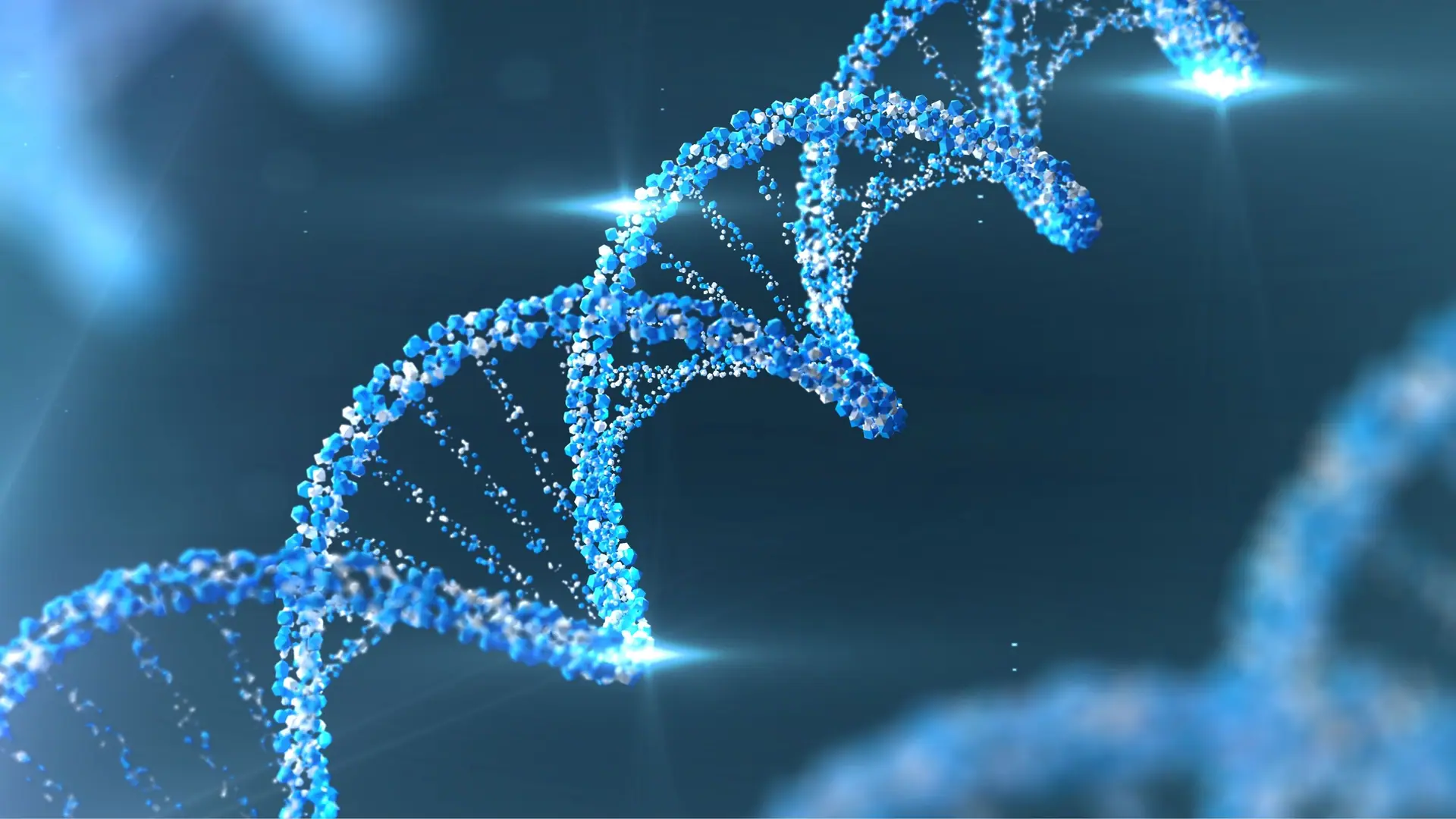
The caps at chromosome ends shorten with each division, but on the intron path, I hold, a re-lengthening response appears.
02 / HOLOBIONT THEORY
Exons are the recipe; introns are the chef's notes. Vertical and horizontal inheritance first meet in the fetus — and the mother makes metabolites her baby can use directly.
In plain words
Genes contain alternating exons, which make proteins, and introns, which help regulate when and how much a gene is used. Just as the same recipe becomes a different dish depending on the chef's notes, introns shape how genes are used.
I see exons as relatively more dependent on vertical inheritance from parents, and introns on horizontal exchange with the environment and microbes. And while telomeres governed by exon expression carry irreversible aging like a fate, I hold that telomeres governed by intron expression show a reversible aging response.
The place where these two paths first meet is the fetus. An early fetus has no working digestive enzymes, so the mother — helped by beneficial microbes in her body (ELAB) — makes metabolites her baby's cells can recognize and use at once. GRBM reproduces this principle of the mother's body outside the body, using plants and their own beneficial bacteria.
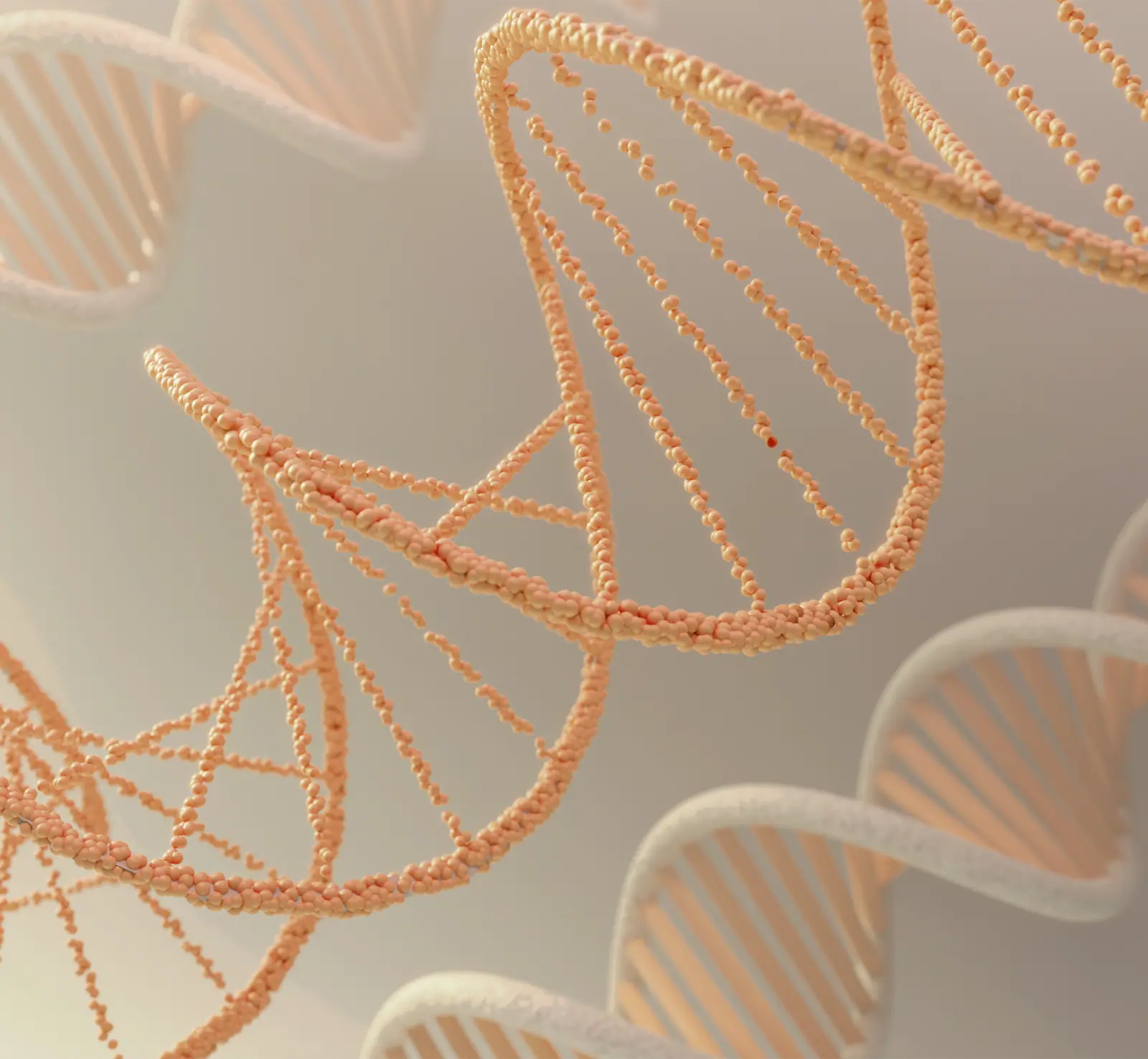
The caps at chromosome ends shorten with each division, but on the intron path, I hold, a re-lengthening response appears.
Inherited from parents (VGT) and exchanged with co-living organisms (HGT). Genes of non-human origin have also been reported in the human genome.
Cells exchanged by mother and baby remained in the mother's blood 27 years after birth. I believe this exchange happens through metabolites.
If beneficial microbes (ELAB) in the mother are lacking, I believe the baby may be born with genetic or metabolic disease.
In my Human Being quadrant, the vertical axis is vertical inheritance (as Genome), the horizontal axis is horizontal inheritance (as Microbiome), and at the center sits the fetus (as Metabolome). From parents through the fetus to the child, and across generations into evolution — Generation for Evolution. Information from the two paths becomes one in the fetus through metabolites, and the result passes to the next generation.
I believe microbial genes are expressed in considerable quantity in the human genome, most prominently in intron regions — and that the greater this influence, the more fetal cells may try to improve their environment through genetic exchange with the pregnant mother's cells.
| Item | Many animals | Humans |
|---|---|---|
| Strategy | Keep strong shielding by massively activating protein genes | Evolved by filling gaps through interaction with microbes |
| Result | Very stable species traits, minimal mutation, weaker adaptability | Stronger adaptability, but health depends on the relationship with microbes |
Indeed, humans rely on gut-microbial enzymes to break down many dietary carbohydrates they cannot digest themselves. So I believe the right starting point for solutions to human health problems is interaction with microbes — and its archetype, the fetus.
I hold that the health of fetuses and infants needs "already-metabolized protein" containing all 22 amino acids and bound with genetic information — so that vertical inheritance from the parents is well expressed, while a plant-LAB-centered gut ecosystem keeps horizontal inheritance alive. This concept became the GRBM MPM (metabolic protein) product line.
Infertility, genetic disease, chronic disease and aging sit inside one structure of life. If the mechanism a mother gives her fetus is reproduced with plants and microbes as an eco-bio food anyone can eat, different social problems can be solved together on one platform. This is GRBM's industrialization model.
Literature: miRNA host genes within introns (Genome Research, 2004), fetal cells persisting 27 years postpartum (PNAS, 1996), horizontally acquired genes in vertebrates (Genome Biology, 2015). Interpretation: source — the developer's (Wooyoung Nam's) research.
PARTNERSHIP · INVESTMENT
After signing an NDA you can review the materials, then verify the original records and the process in person during on-site due diligence in Uljin, Gyeongsangbuk-do, Korea.