06 / INTAKE · 12 WEEKS
What we eat decides
what kind of people and society we become
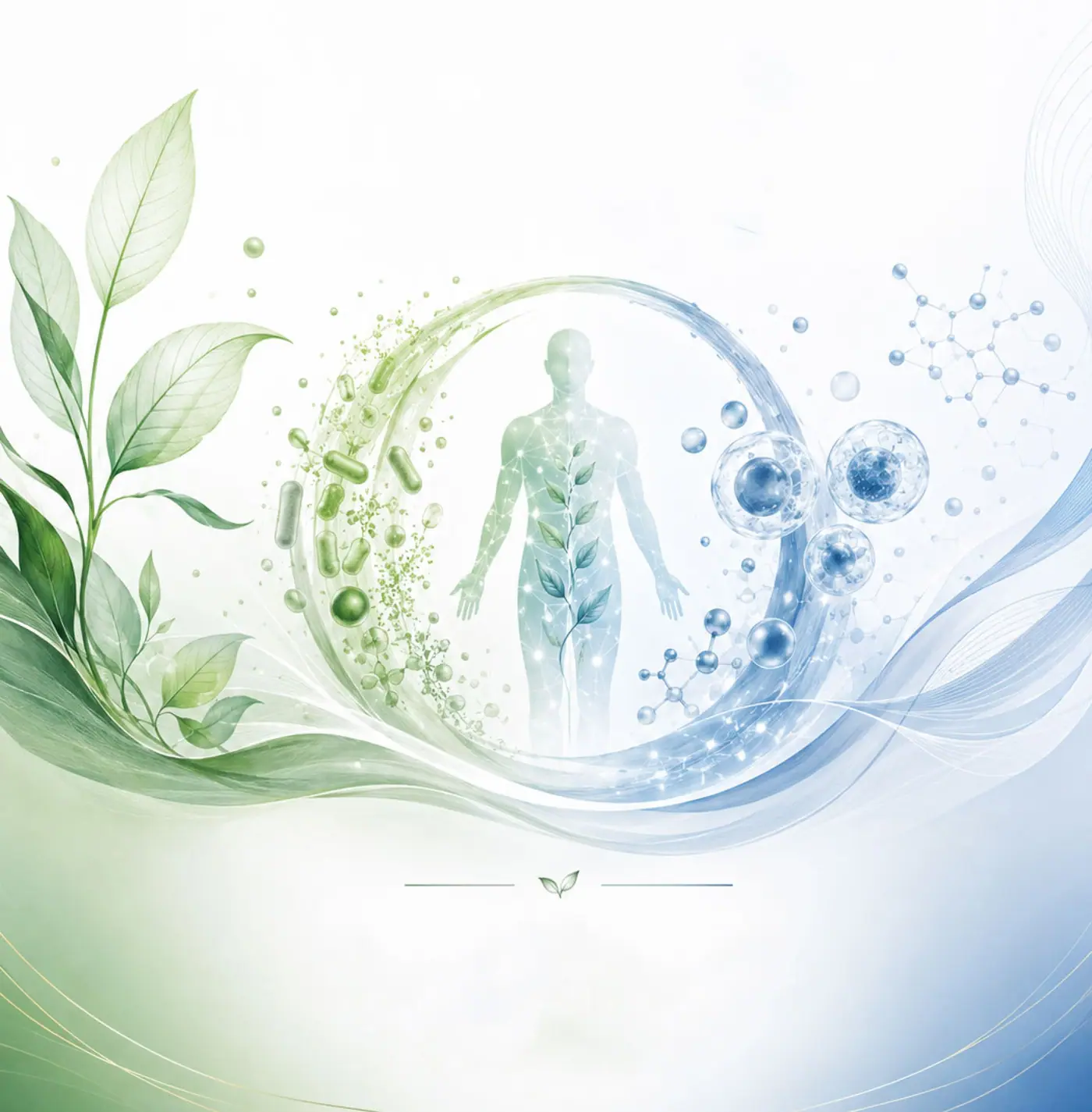
Food → microbiome → gut–brain axis → neurotransmitters → behaviour → society. I developed GRBM from a single question: could human emotion, behaviour and even sociality be the result of ecological metabolism?
In plain words
"Man is what he eats." It is an old saying, but modern society has understood it only as a matter of numbers — protein, carbohydrate, fat and vitamins. Yet people are not calorie machines. We feel, build relationships, love, rage, trust, despair and rise again. And at the start of all this lies the gut-microbiome ecosystem.
What we eat changes the make-up of our gut microbes. Some foods stabilize the microbial ecosystem; others drive it toward excessive competition, inflammation and stimulation. Gut microbes do not simply break food down — they talk constantly with our nervous system. Modern medicine calls this the gut–brain axis.
For a long time I have asked: "What if human behaviour, emotion and even sociality are the result of ecological metabolism?" Green Red BIO Metabolome was born at the end of that question.
FROM FOOD TO SOCIETY
From food to society,
six links in a chain
-
01
Food
Natural foods, dietary fibre, well-aged traditional foods and diversity build a healthy gut ecosystem; processed foods, excess sugar, refined carbohydrates and artificial additives build an unbalanced one
-
02
Microbiome
The composition of gut microbes changes with what we eat
-
03
Gut–brain axis
The gut is connected to the brain, and that connection sways emotion and behaviour, desire and impulse
-
04
Neurotransmitters
The balance of serotonin and dopamine shifts
-
05
Behaviour
We lean toward empathy and care, or toward instant pleasure and impulse
-
06
Society
Individual choices add up and change the direction of society and civilization
SEROTONIN · DOPAMINE
Serotonin and dopamine —
balance is the key
| When the serotonin system is active | When the dopamine system is over-active | |
|---|---|---|
| Emotion | Emotional stability, quiet happiness | Pursuit of instant pleasure |
| Behaviour | Better focus, the strength to wait | Impulsive behaviour, more risk-taking |
| Relationships | Social connection, empathy, care, trust | Competition, comparison, desire to dominate |
| Orientation | A heart that understands love, affection (jeong), will and sorrow | Centred on material and physical desire, higher risk of addiction |
Serotonin gives people stability. The more stable serotonin is, the more people seek to connect with others, to feel love, to understand sorrow and to live together. Human society actually rests on these feelings. Dopamine, by contrast, drives people forward. Working well, it becomes breakthrough and creativity; out of control, it turns into impulsiveness and addiction.
People usually learn fear around ages 5–7 and again around 14–17, and through it learn the range of behaviour society allows. But when low serotonin and excessive dopamine persist, people put their own stimulation ahead of others' feelings, empathy weakens, and they begin to cross the limits society permits. Violence, addiction, impulsive acts and destructive consumption may not be only a matter of "lack of will". I believe a collapse of the gut–brain axis and an imbalance of the metabolic ecosystem may lie behind them.
Technology without empathy becomes dangerous,
and a society left only with desire destroys itself
The balance of serotonin and dopamine is not a matter of mood; it is tied to the direction of civilization.
WHY GRBM
Reconnecting the metabolic ecosystem
of plants, microbes and people
When serotonin cannot regulate dopamine, people often limit themselves through addiction. Addictions to alcohol, gambling, excessive exercise, shopping, the internet and games are structures that repeatedly drain the dopamine circuit — an imperfect safety device that burns the self while holding back a greater run-away.
Modern society keeps stimulating dopamine with short videos, excessive consumption, extreme competition and a culture of instant pleasure. Meanwhile the ecological environment that steadily restores serotonin is collapsing. People are connected yet lonely, and amid overflowing stimulation they grow emptier.
What I set out to make was not just a health food. Plants have built a vast store of genetic response strategies while surviving in Earth's ecosystem for hundreds of millions of years, and microbes have lived in symbiosis with them, exchanging information all the while. GRBM is an ecological metabolic system that reconnects that relationship to people, restoring the bond between human cells, gut microbes and plant ecosystems so that serotonin rises and dopamine is held in balance.
In the end, we change according to what we eat. And what we eat may also change what kind of society we build.
Wooyoung Nam · Developer of GRBM
Source: the developer's (Wooyoung Nam's) perspective and research. The link between neurotransmitters, behaviour and society is the developer's interpretation and does not represent medical claims about GRBM.
PARTNERSHIP · INVESTMENT
The world's first true eco-bio platform technology —
we are looking for the one partner
After signing an NDA you can review the materials, then verify the original records and the process in person during on-site due diligence in Uljin, Gyeongsangbuk-do, Korea.