
01
Ginseng
Wild mountain ginseng over 230 years old survives by advancing its ginsenosides into rare forms such as Rg5, Rg6, Rh3, Rh4, Rk3, Rk4 and M12. VPMI reproduces this advancement in a 12-week process.
04 / GREEN RED BIO METABOLOME
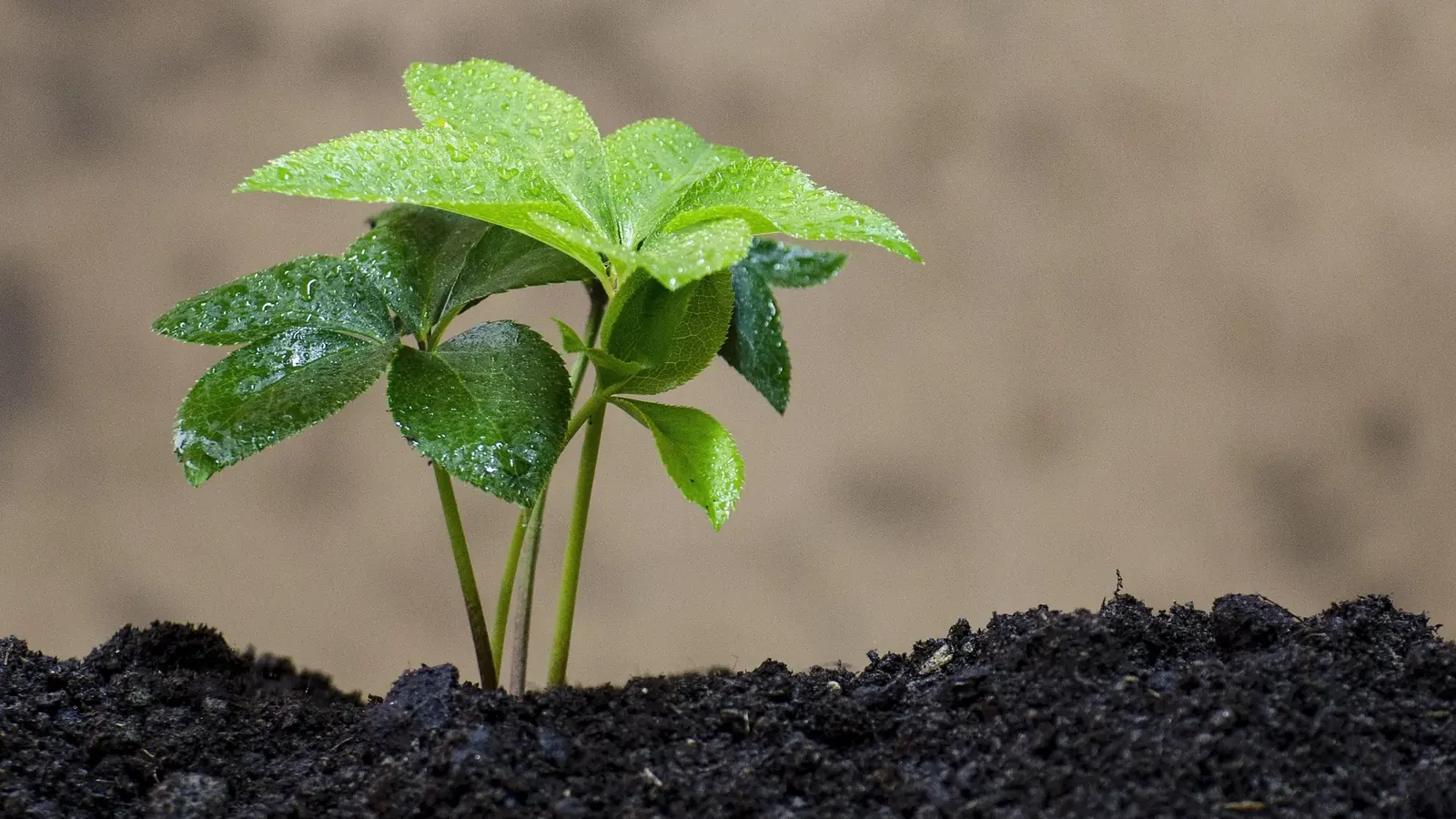
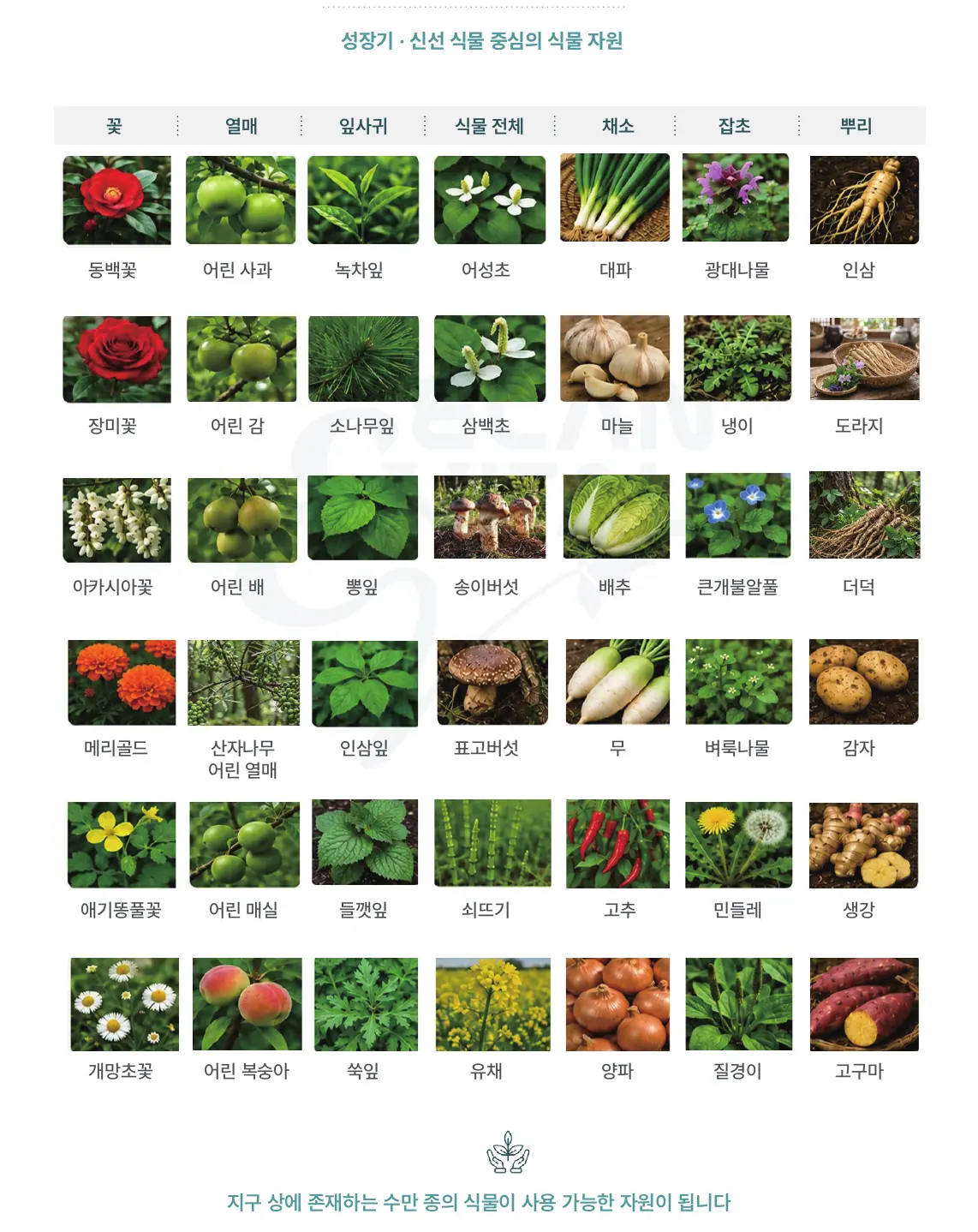
Raw materials are not limited to particular varieties. The younger and fresher the plant, the higher its vitality and the better the material. Sixty species have been tested so far.
In plain words
Korea has a very diverse plant ecosystem and has kept its health for thousands of years by eating many plants. I reread that wisdom from the perspective of genetic biology.
Like humans, plants have intron-centered gene structures, the non-protein regions. That makes them an ideal channel for safe, efficient horizontal gene transfer between cells and microbes.
And there is an absolute standard for raw materials: the youngest, freshest state, with vitality fully intact. Growing plants and young fruit, rich in cell division, defense responses, pigments and aromas, are vast stores of metabolic energy in themselves.
| Plant | Direction it may support |
|---|---|
| Chinese yam | Adsorbing and expelling harmful substances in the gut |
| Green plum (maesil) | Detoxification and metabolic activity |
| Apple | Body-fat breakdown and skin health |
| Mulberry leaf | Inflammation control, clot breakdown, repair of micro-damage in vessels |
| Greater celandine | Recovery of damaged kidneys and pancreas, blood-sugar control |
| Camellia | Skin-cell regeneration |
| Lettuce | Better sleep quality |
| Marigold | Development and stability of the optic nerve |
| Butterbur | Regeneration of lung tissue |
| Pine mushroom | Neutralizing viruses, restoring immunity and cognition |
| Shiitake · acacia | Muscle development |
| Green onion · garlic | Stabilizing female · male physiology |
Moving beyond a few edible species to an era that turns most plants into bio-food: the moment the food problem is solved, and a source of countless new bio-materials.
Wild mountain ginseng over 230 years old survives by advancing its ginsenosides into rare forms such as Rg5, Rg6, Rh3, Rh4, Rk3, Rk4 and M12. VPMI reproduces this advancement in a 12-week process.
A PANAX fruit long called the "vitamin berry" in Eurasia. It changes easily when processed and its fat-soluble vitamins are hard to absorb — solved with a "vitamin GRBM."
As climate-driven microbial mutations threaten human health, technologies that strengthen plants' genetic learning to raise human resilience are essential. Turning plants into resources protects and adds value to carbon-absorbing plant ecosystems — advancing human health and cutting greenhouse gases together.
Smart farms managed through AI learning produce more reliable raw materials and become key hubs for advanced bio-pharmaceutical materials. Managing seeds, microbial strains, water treatment and nutrition makes top-quality cultivation possible — because VPMI also uses plants' precursors.
Functional directions by plant: source — the developer's (Wooyoung Nam's) observations. No claim of treating disease is made; results will be published as plant-specific clinical papers.
PARTNERSHIP · INVESTMENT
After signing an NDA you can review the materials, then verify the original records and the process in person during on-site due diligence in Uljin, Gyeongsangbuk-do, Korea.