
01
Salt-free 0.0% to low-salt 0.3%
Custom design by use makes it suitable for medical and care foods such as baby food, post-surgery recovery meals and senior meals, and responds to the global low-salt trend.
05 / K-ECO BIO 10 · PIPELINE
GRBM MFK is a medi-food kimchi redesigned on a salt-free, functional, bio-metabolic basis; GRBM MFB is a daily metabolic-balance drink made from the liquid metabolome fraction. They are the two lines that meet the mass market first.
In plain words
The heart of GRBM MFK is redefining kimchi, a Korean cultural asset, to the standards of the global health-food market. Traditional kimchi's high salt and strong flavour can limit its global consumer base. MFK eases the sodium burden and raises lactobacilli metabolites and plant bio-components, evolving into a new kimchi for patient meals, baby food, seniors and global wellness while keeping kimchi's own flavour and function.
GRBM MFB turns the liquid metabolome fraction of plant GRBM into a drink. Drinks are consumed often and repurchased readily, so this line can deliver the GRBM platform's mass-market validation fastest.
Both lines sit in the food domain, so commercialization can be relatively fast. Building on the record first proven by kimchi in the first-generation technology, GRBM extends kimchi into a bio-food and drinks into a metabolome platform.

GRBM MFK · METABOLIC FUNCTIONAL KIMCHI
What consumers worldwide want are enhanced metabolic foods, gut-health bio-foods, low-salt low-burden foods and naturally derived functional foods. MFK answers all four with Korean food. If conventional kimchi used salt to keep harmful bacteria down, MFK is the Korean food of the future, in which VPMI-CM and activated Vital Probiotics lead lactic metabolism.
Custom design by use makes it suitable for medical and care foods such as baby food, post-surgery recovery meals and senior meals, and responds to the global low-salt trend.
0.0% salt-free kimchi needs no desalting step. Kimchi lactobacilli drinks can be made without losing metabolic nutrients, and cosmetic ingredients can skip desalting, avoiding pigmentation problems.
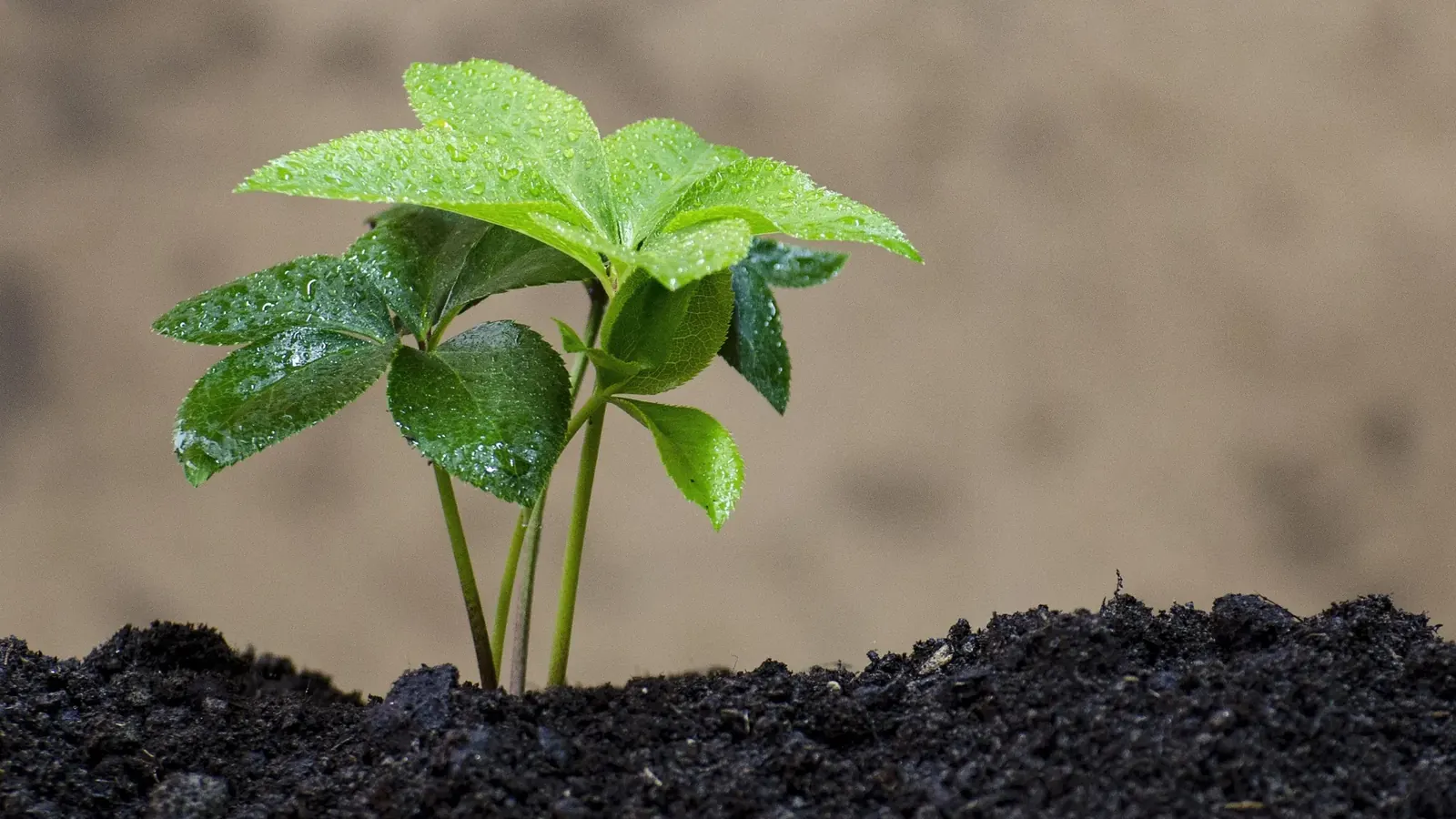
Unlike regular GRBM, which needs fresh young plants, Kimchi GRBM's broth-based metabolic design can use dried medicinal herbs, dried plants and seafood.

With no salting step, soluble fibre is not lost. Lactobacilli and insoluble and soluble fibre reach the gut alive together, creating favourable conditions for the recovery of gut-barrier cells.
Heightened responses of taste-bud cells make small amounts of flavour feel strongly salty, sweet and savoury, so flavour holds even in a low-salt diet.
MFK LINE-UP
| Product | Salt | Features |
|---|---|---|
| Salt-free kimchi for babies | Salt-free | Made without salt for a mild taste; safe ingredients the whole family can share |
| Low-salt kimchi for children | Low salt | A mild taste and balanced nutrition that support children's eating habits |
| Probiotic kimchi | Low salt | Lactic metabolism brings a refreshing, deep savoury taste — a premium kimchi |
| Salt-free salad kimchi for patients | Salt-free | Made without salt; a clean, light salad type |
| Low-salt probiotic kimchi for fitness | Low salt | Low-salt design and beneficial-bacteria metabolism support exercise and a balanced diet |
The flagship plant-lactobacilli salt-free kimchi 300g is made with unsalted cabbage, a seasoning paste based on a broth simmered from natural ingredients, and VPMI-CM. By company tests it contains more than 30 billion CFU of live plant lactobacilli, an insoluble-to-soluble fibre balance of about 10:1 and no detectable coliforms. Eat it lightly like a salad on an empty stomach in the morning, or freeze it as a smoothie ingredient.
Trial sales and tastings in 2013–2018 recorded about 2.36 times the willingness to pay of conventional kimchi and a preference score about 20 points higher out of 100.
MARKET · VALIDATION
MFK went through trial sales for market research from 2013 to 2018. Tastings combined with market research were held for about 30,000 people in Korea, the United States, China, Japan, Hong Kong, Italy, the United Kingdom, Russia, Türkiye and Australia, confirming about 2.36 times the willingness to pay of conventional kimchi and a preference score about 20 points higher out of 100. The social validation record of salt-free and low-salt kimchi is at www.gimchi.biz.
Estimating from the world's main kimchi markets, the company sees room for a market of around USD 3 billion. A major advantage is easy customs clearance even in markets with high trade barriers on foods containing coliforms or with stricter salt standards.
Recovery diets and care foods
Low-burden metabolic foods for older adults
Growth-stage diets without a salt burden
Globalizing plant-based K-Food
Extending into kimchi lactobacilli drinks
Metabolic ingredients with no desalting step
GRBM MFB · METABOLOME FRACTION BEVERAGE
The formal name of GRBM MFB is Green Red BIO Liquid Metabolome Fraction. It is a water-soluble metabolome containing water-soluble organic acids, water-soluble bioactive substances, water-soluble genetic material and plant nutrients, with pH about 3 and acidity around 10%. At its core is a lactic + acetic compound organic acid, joined by a variety of solubilized phytochemicals and plant metabolites. It is designed as a daily medi-food drink aimed at circulation and metabolic balance.
| Item | Standard |
|---|---|
| Dilution | Up to 532×; recommended within 50× |
| Product options | Carbonation, oligosaccharide blending |
| Distribution and storage | Frozen distribution recommended; drink after thawing naturally for about 6 hours below 32 °C |
| Example intake | 50 ml of concentrate as is, or 50 ml of concentrate + 200 ml of water |
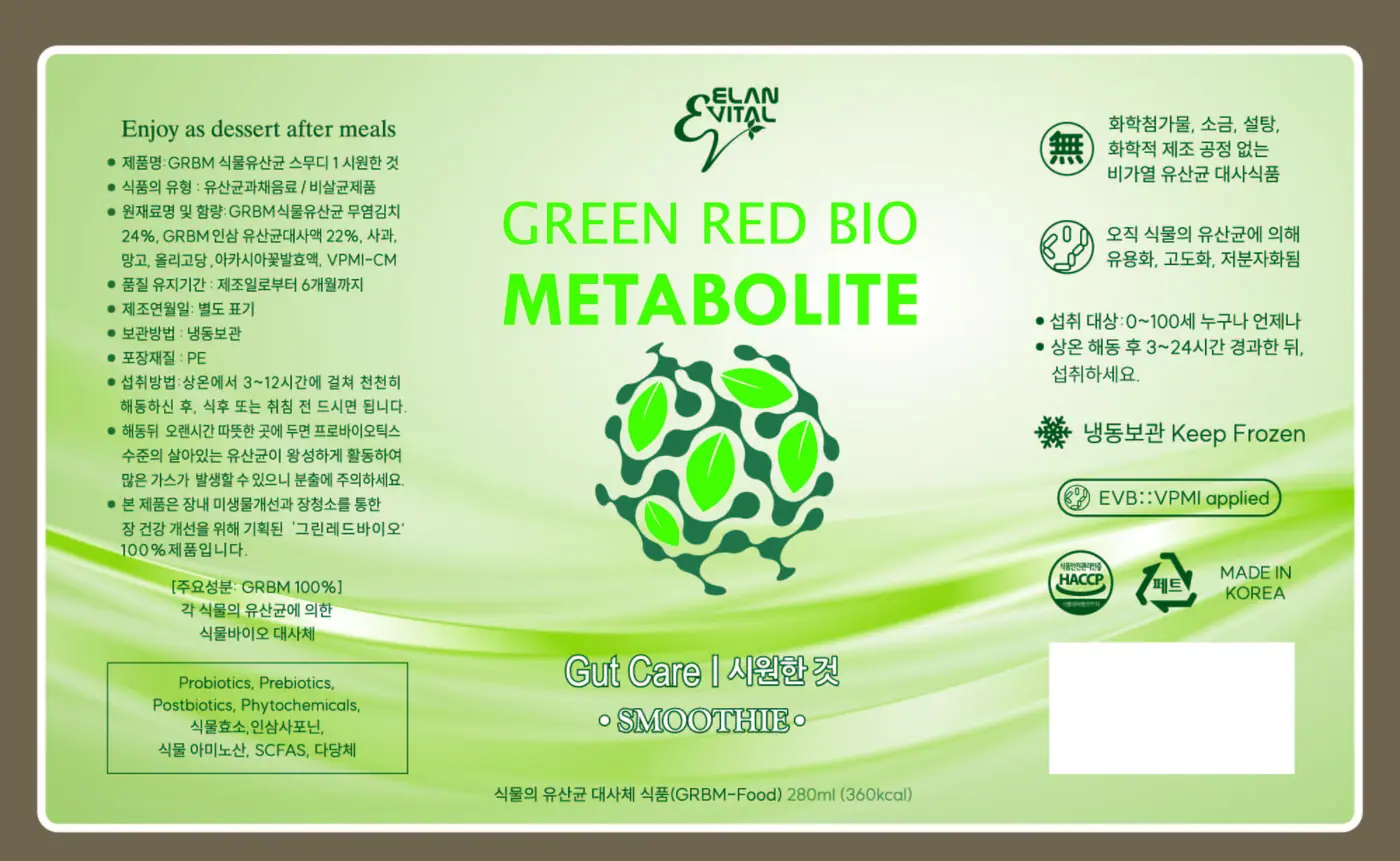
The flagship GRBM MFB GINSENG 250ml is made of 97% liquid fraction of the ginseng metabolome (ginseng, VPMI-CM, water) and 3% oligosaccharide. Because saponins create natural sparkle, it was designed in an aluminium can, with no artificial carbonation. Stored chilled at 0 °C, it is proposed as one can to close the day, much as a shower closes it.
According to market estimates cited in company materials, the global kombucha market was about USD 2–3 billion in 2023–2024 and is expected to grow 19–22% a year through around 2030. Interest in gut health and the microbiome, the shift to low-sugar and low-calorie drinks, the mainstreaming of functional drinks, demand for healthy sparkling and alternative sodas, and the spread of subscription distribution are driving this trend. It has already opened a market window for metabolic-balance drinks like MFB.
| Conventional kombucha | GRBM MFB | |
|---|---|---|
| Base | Tea, sugar, SCOBY | GRBM liquid metabolome fraction |
| Key components | Gut health, probiotic, low sugar, natural, vegan | Water-soluble organic acids (lactic + acetic), phytochemicals, plant metabolites, nutrients |
| Positioning | Gut-health-centred | A daily medi-food drink centred on whole-body metabolism and circulation |
| Challenge | Detail | Response |
|---|---|---|
| Consumer understanding | The idea of a "metabolome" may be unfamiliar | Translate it into simple messages |
| Taste and preference | Acidity at pH 3 and about 10% may divide opinion | Adjust with carbonation, fruit, herbs and oligosaccharides |
| Regulation and labelling | Country-specific functional-labelling strategy is needed | Minimize medical wording and label country by country |
Market figures are external estimates cited in company materials; tasting results and product specifications are company records. Example intakes are product-use examples, not medical treatment guidance.
PARTNERSHIP · INVESTMENT
After signing an NDA you can review the materials, then verify the original records and the process in person during on-site due diligence in Uljin, Gyeongsangbuk-do, Korea.